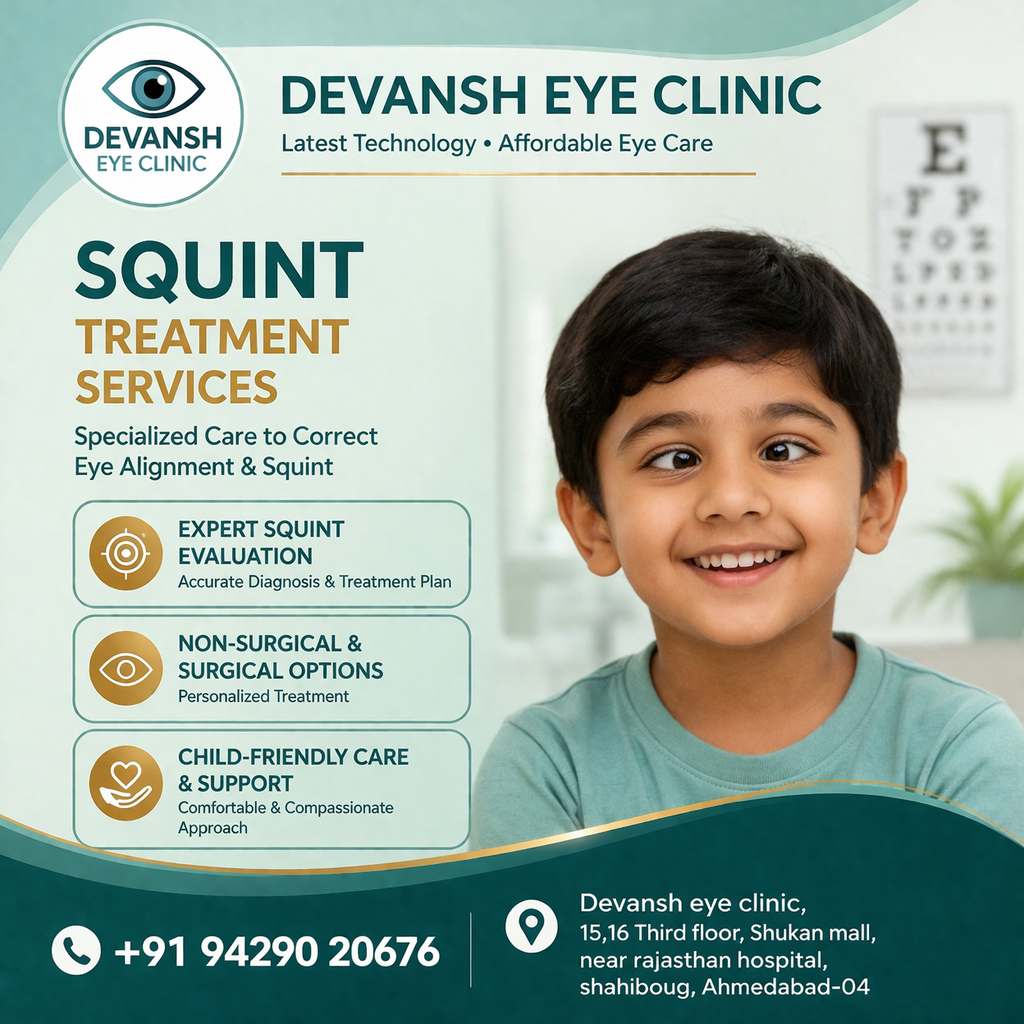
Squint, medically known as strabismus, is a condition where the eyes do not align properly and point in different directions. This misalignment can affect one or both eyes and may be constant or intermittent. At Devansh Eye Clinic, the Best Eye Hospital in Ahmedabad, we specialize in advanced squint surgery and comprehensive care to restore proper eye alignment and improve both vision and appearance.
In this guide, we explain everything you need to know about squint surgery—its causes, symptoms, treatment options, risks, and preventive tips—to help patients make informed decisions.
What Is Squint Surgery?
Squint surgery, also known as strabismus surgery, is a medical procedure performed to correct misaligned eyes. The surgery involves adjusting the muscles around the eyes so that both eyes align properly, improving vision and appearance. While children are commonly affected, adults with long-standing or newly developed squints can also benefit from surgery.
Squint surgery can be both functional and cosmetic, aiming to:
- Restore proper eye alignment
- Improve depth perception and binocular vision
- Enhance facial appearance
- Prevent complications such as amblyopia (lazy eye)
What Causes Squint That Requires Surgery?
Understanding the causes of squint surgery helps in early detection and management. The main causes include:
| Cause | Description |
| Congenital Strabismus | Present at birth due to abnormal development of eye muscles or nerves |
| Refractive Errors | Severe uncorrected hyperopia (farsightedness) can lead to inward squint (esotropia) |
| Neurological Disorders | Conditions like cerebral palsy, stroke, or brain injury affecting eye muscles |
| Trauma | Injury to eye muscles or surrounding nerves |
| Chronic Eye Conditions | Cataract, retinal disorders, or eye muscle imbalance |
| Systemic Conditions | Diabetes or thyroid disorders affecting eye muscles |
What Are the Symptoms of Squint?
Recognizing symptoms of squint surgery is crucial for timely intervention. Symptoms may vary depending on the type and severity of squint:
- One eye deviates inward, outward, upward, or downward
- Double vision (diplopia)
- Difficulty focusing or reading
- Head tilting or turning to use the dominant eye
- Eye strain or fatigue
- Reduced depth perception
Early diagnosis can prevent long-term vision problems and improve surgical outcomes.
Types of Squint
Squints are categorized based on the direction and frequency of misalignment:
| Type | Description |
| Esotropia | Eye turns inward |
| Exotropia | Eye turns outward |
| Hypertropia | Eye turns upward |
| Hypotropia | Eye turns downward |
| Intermittent | Occurs occasionally |
| Constant | Present all the time |
At Devansh Eye Clinic, we perform detailed assessments to determine the type and severity before recommending surgery.
How Is Squint Surgery Performed?
Squint surgery is generally an outpatient procedure performed under general anesthesia in children and local or general anesthesia in adults. The steps typically include:
- Preoperative Assessment
- Eye measurements and alignment tests
- Vision assessment and muscle evaluation
- Medical history and general health check
- Surgical Procedure
- Small incisions are made to access the eye muscles
- Muscles are either tightened, loosened, or repositioned to align the eyes
- Surgery usually lasts 30–60 minutes
- Postoperative Care
- Antibiotic and anti-inflammatory eye drops
- Protective eye patch or shield for a few days
- Follow-up visits to monitor healing and alignment
Most patients notice improved eye alignment within weeks, though full recovery may take a few months.
Risks and Complications of Squint Surgery
Like any surgical procedure, squint surgery carries potential risks. However, serious complications are rare when performed by experienced surgeons at a trusted facility like Devansh Eye Clinic. Possible risks include:
- Temporary double vision
- Under-correction or over-correction (may require revision surgery)
- Infection or bleeding
- Scarring (rare and usually minimal)
- Reaction to anesthesia
A thorough preoperative evaluation and adherence to postoperative instructions can minimize these risks.
Non-Surgical Treatment Options
Not all squints require surgery. Non-surgical management may include:
- Prescription glasses to correct refractive errors
- Eye patching therapy for amblyopia
- Prism lenses for minor misalignment
- Vision therapy and exercises
Surgery is recommended when conservative measures do not achieve satisfactory alignment or if the squint significantly affects vision and appearance.
Preventive Tips and Early Intervention
While congenital squints cannot always be prevented, early detection and intervention can prevent complications:
- Schedule regular eye exams for children, especially before age 5
- Correct refractive errors promptly
- Treat eye infections and injuries promptly
- Monitor for signs of squint such as eye turning, tilting of the head, or double vision
Early intervention often reduces the complexity of surgery and improves outcomes.
Learn more about other advanced eye procedures we offer at Best Eye Hospital in Ahmedabad.
Frequently Asked Questions (FAQs)
At what age can squint surgery be performed?
A: Squint surgery can be performed in children as young as 1–2 years old and in adults. Early surgery in children often leads to better visual development.
Is squint surgery painful?
A: The procedure is painless under anesthesia. Mild discomfort or soreness may occur postoperatively, managed with medications.
How long does recovery take?
A: Most patients recover within 1–2 weeks, but complete eye alignment and stabilization may take a few months.
Can squint recur after surgery?
A: Recurrence is possible, especially in complex cases. Follow-up care and, occasionally, revision surgery may be needed.
Will my child need glasses after squint surgery?
A: Some children may continue to need glasses to correct refractive errors or maintain proper eye alignment.
Is squint surgery covered by insurance?
A: Many health insurance plans cover medically necessary squint surgery. Coverage depends on the policy and specific case.
Why Choose Devansh Eye Clinic for Squint Surgery?
At Devansh Eye Clinic, the Best Eye Hospital in Ahmedabad, our experienced ophthalmologists provide:
- Comprehensive preoperative evaluation
- Advanced surgical techniques for safe and effective results
- Personalized postoperative care
- Family-friendly support and patient education
We combine medical expertise with compassionate care, ensuring that every patient receives the best possible outcome.
Schedule a Consultation
If you or your child are experiencing eye misalignment, don’t wait. Early assessment and intervention improve both vision and quality of life. Contact Devansh Eye Clinic today to schedule a consultation with our squint specialists and explore the most suitable treatment options for you.